On Analog Recording
This is the first newsletter from Electric Platypus. I meant to start these some time ago, but for a while, the only people signed up to my email list were my mom and brother so it didn’t seem like a worthwhile business endeavor (Hi mom!). There are quite a few more of y’all now so I hope to make this a roughly monthly occurrence.
For those of you who haven’t already heard it, Steve Deckel released a song entitled “Iron Horses” in October of last year, recorded here at Electric Platypus. Steve is a musician and songwriter that I have immense love and respect for. You’re missing out if you don’t check him out (also check out “Welcome” which was recorded here at Electric Platypus). I’ll wait. Have a listen and come back…
Go on - I’ll still be here. I promise. I even made those links open up in a new browser tab for you so you won’t accidentally lose this page…
Welcome back. The most astute listeners among you may have noticed something a little bit different about this recording from our usual work. You may have noticed a little bit of a hissing or a bit of a softer sound. Those features exist in the recording because it was recorded to analog tape. Specifically, a Tascam 234 4-track cassette recorder manufactured in the 1980’s.
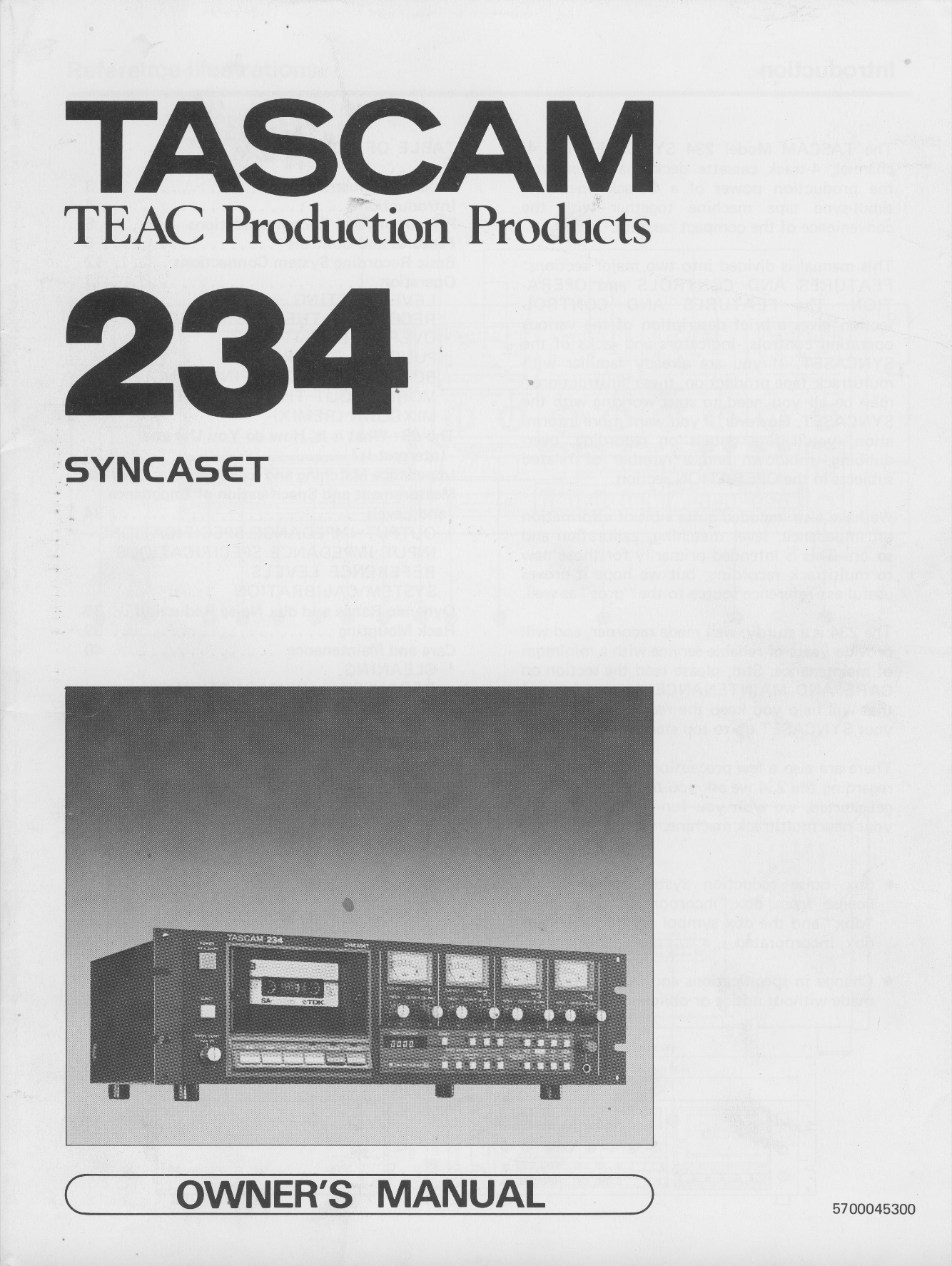
Very 1980s styled owner’s manual
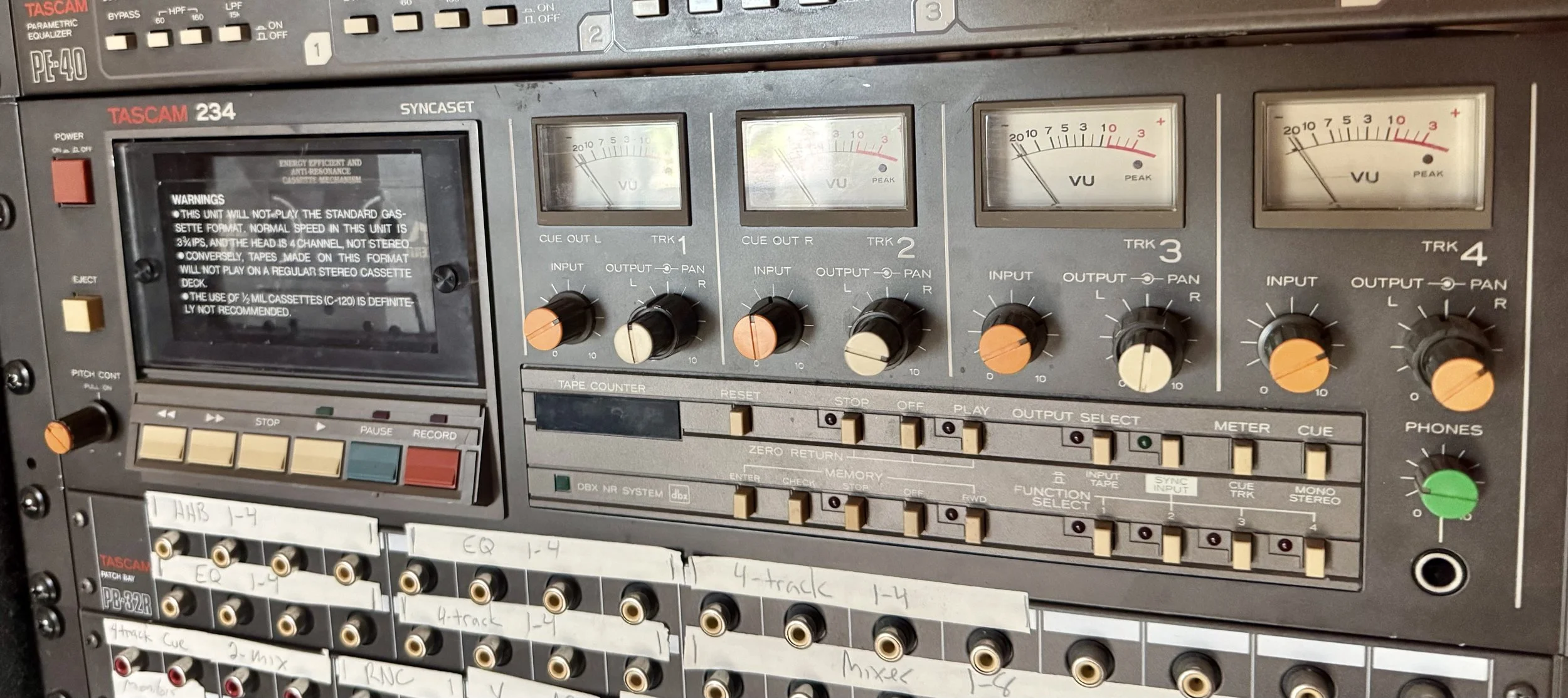
Our Tascam 234 at Electric Platypus
This is the first analog recording produced at Electric Platypus. Given that we have two of the best digital interfaces that money can buy, with exceptional preamps, clocks, and converters, it’s VERY reasonable to ask “Why the hell would you record to a 40 year old “prosumer” tape machine?”. The answer may not be what you expect.
Much ink and many bytes have been wasted debating the sonic differences between analog and digital recording. If you’ve read other articles contrasting digital and analog audio, this is probably the part where you expect me to prattle on about how warm analog sounds and how superior it is to digital audio. However, the sound of analog recording is less interesting to me than the way in which it changes the artist’s performance.
At this point, I may have lost you if you haven’t been a musician or engineer on an analog recording project. How does swapping a tape machine for a computer change the artist’s performance? They’re standing in the same studio in front of the same microphone, playing the same song, and usually can’t even see the recording device. How could that change the performance?
The answer is that analog recording changes the entire recording and post-production process because editing is extremely impractical. Editing tape with a razor blade and splicing block is virtually a lost art and far too complicated and labor intensive for most budgets. In the digital realm, with a few mouse clicks, I can fix a kick drum or snare that was hit a little out of time. I can have a vocalist record 20 takes and I can stitch together a superhuman performance by picking the best take for each phrase, word, or even syllable. Sang a note out of tune? No problem, easy fix.
You just can’t practicably do these things in an analog recording. Sure, if you make a mistake, you can “punch in” and re-record just that part of the song. But when you do so, you erase what was there before. It is gone forever. It’s an inherently risky procedure. You have to think very carefully about what is a mistake that needs to be fixed and what is a happy accident or minor imperfection that should be left in. Preparation and practice are crucial to success. Also, some aspects of performances may need to be simplified and boiled down to their core essence without superfluous embellishments and decoration that are difficult to play consistently and don’t contribute to the core impact of the music.
In the end, when the musicians are prepared and the song is well arranged, you can end up with a performance that is more “flawed” but also more authentic and human.
It’s not appropriate for every project, and I won’t be discarding any of my digital software/equipment. But in this age of perfectly polished superhuman recordings and AI encroaching into every aspect of our creative lives, an occasional analog recording is a great way to inject some raw humanity back into our art and remind ourselves that we’re still flawed but beautiful human beings and not machines.
Fix the mistakes; but try to save and treasure the accidents - regardless of what tools you are using.
Upcoming Release - Keith Hampton, Only Echoes
I’m also extremely happy to announce that Keith Hampton, Only Echoes will be releasing in just four days, on April 10th.
Every project that leaves Electric Platypus is special to me by the time it leaves the studio. But this project is particularly special to me.
This album is the longest running recording project that I’ve ever participated in. At the time that we started work on it, Keith and I only had a few hours per week (on Sunday afternoons) where our schedules overlapped and permitted us to get together and work. But rather than rush through the project as a result, we took it slowly, challenging each other along the way to try new ideas, sometimes even restarting a song from scratch as a new idea came along.
In the end, it took us over 2 years to complete the album: 1 hour here… 3 hours there…. And so I am very excited to finally have it going out into the world.

Album cover photo shot by yours truly at Brushy Creek, Round Rock TX.